
December 16, 2025
Airbnb revolutionized rental protection with AirCover, offering automatic coverage for every booking. This model has inspired long-term rental platforms to embed similar protections into leases, addressing issues like property damage, liability, and tenant belongings. These built-in protections simplify processes, reduce risks, and create trust between landlords and tenants. Platforms like Walnut Insurance make integration easy with API-driven solutions, offering landlords and tenants seamless coverage while opening up new revenue opportunities for rental platforms.
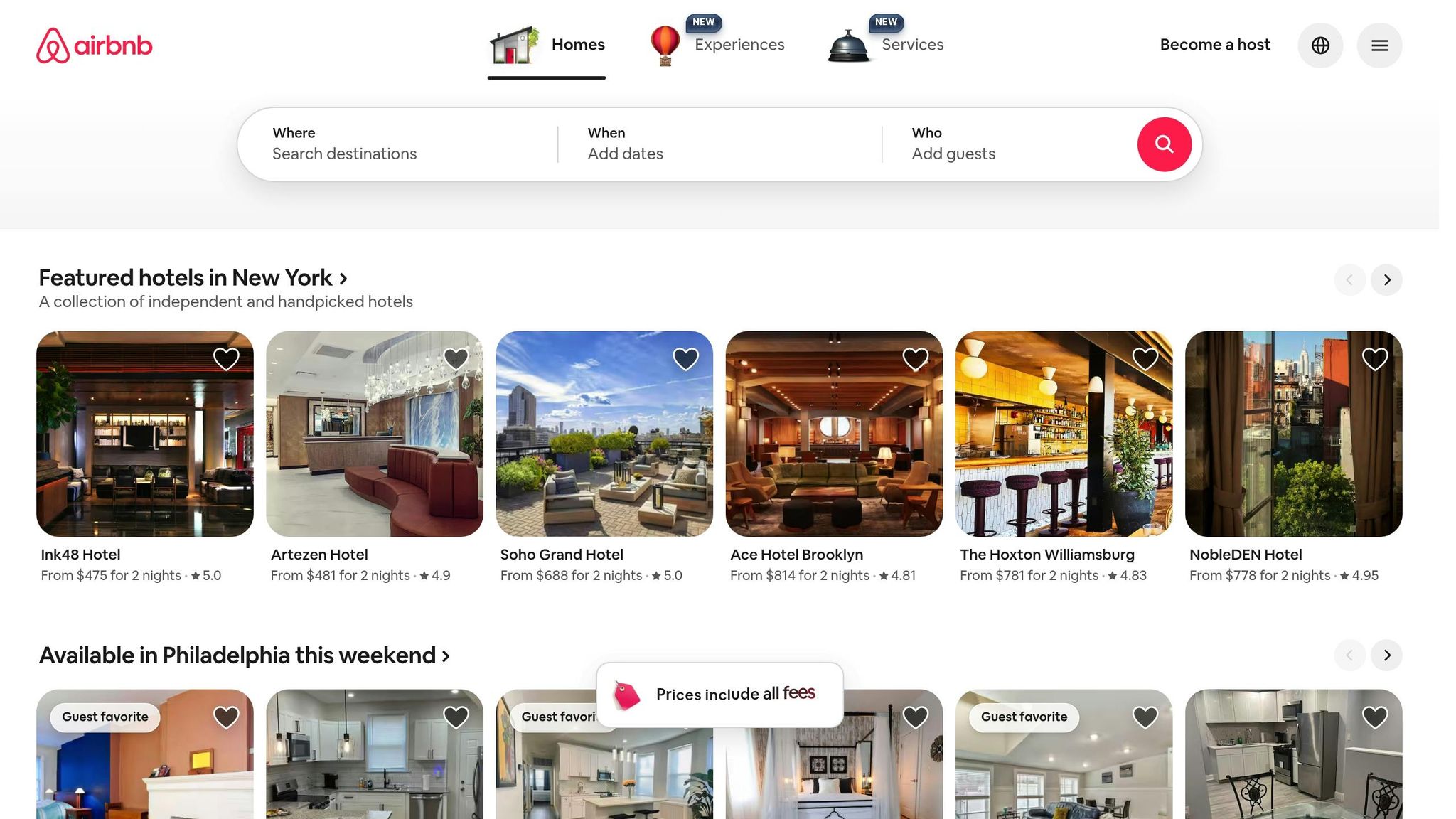
In late 2021, Airbnb introduced AirCover, a free protection program that automatically applies to every booking. It replaced the older Host Guarantee and broadened the scope of coverage significantly [3]. AirCover offers protection against a variety of potential issues, including extensive damage, liability concerns, income loss, pet-related damage, and even deep cleaning expenses [3].
But AirCover isn’t just about financial safety. It also includes guest identity verification and reservation screening powered by algorithms designed to spot suspicious activity before bookings are confirmed [4]. Airbnb enhances this with watchlist checks for both guests and hosts, and in the U.S., additional background checks are conducted. A 24/7 global support team, providing assistance in 11 languages, helps manage claims and coordinate during emergencies [2].
This comprehensive setup ensures a smoother claims process for everyone involved.
AirCover doesn’t just protect - it also fosters trust. By prominently displaying AirCover on listing pages, Airbnb gives guests added peace of mind when booking [3].
"When guests book a stay through Airbnb, the presence of Airbnb AirCover is indicated on the listing page, boosting trust for both guests and hosts. It's a win-win solution."
The program simplifies claims management with a 24-hour hotline, cutting through the usual red tape associated with traditional insurance claims [1]. This streamlined process reduces disputes by offering clear financial protections for both hosts and guests. For guests, AirCover also steps in with rebooking help or refunds if a host cancels before check-in, becomes unreachable, or if the property doesn’t match its listing [2].
These protections set a new standard for integrating safety measures into short-term rental platforms, offering a model that could inspire similar systems in long-term rentals.
Long-term rentals come with a unique set of challenges compared to short-term stays. Tenants staying for extended periods bring cumulative risks - like ongoing wear and tear, persistent liability concerns, and the gradual emergence of property damage [7]. Adding to this, the long-term rental market is growing steadily [8]. Unlike short-term guests, long-term tenants typically store a significant amount of personal belongings. On average, renters have $24,278 worth of personal property that requires coverage [5]. For landlords, the risks are equally pressing, including prolonged liability exposure and damage that might not surface until much later.
These specific issues highlight the importance of having tailored insurance solutions to meet the needs of both tenants and landlords.
Embedded insurance is designed to tackle these challenges head-on by delivering seamless and continuous protection [6]. With this approach, long-term rentals automatically include property, liability, and contents coverage from the first day of the lease. This eliminates the need for tenants to search for separate policies or for landlords to manually confirm coverage [6]. By ensuring uninterrupted protection throughout the lease term, embedded insurance removes potential coverage gaps [6].
According to Deloitte, embedded property and casualty insurance could generate up to $70 billion in sales in the U.S. by 2030 [6]. These solutions not only offer flexible coverage limits but also simplify the claims process [6]. As Marat Nevretdinov, Managing Director at HDI Embedded, explains:
"This model furthers the level of trust an individual has for that brand and drives greater loyalty for future purchases." - Marat Nevretdinov
Walnut Insurance simplifies the integration of insurance into rental systems by offering two flexible options: a REST API for platforms seeking detailed customization and a no-code solution that can be up and running within a day [10].
With access to over 14 insurance carriers through a single integration, rental platforms no longer have to juggle multiple insurer partnerships or manage separate agreements. Instead, they can easily offer tenant insurance, landlord insurance, and other related products through one streamlined system. Walnut's REST API employs resource-oriented URLs, form-encoded requests, and JSON responses, all secured with API key authentication [11].
Time is a critical factor, and Walnut delivers. Platforms can launch branded insurance programs in just a few days [10]. For those with development teams, deeper API-driven integration can be completed in as little as 30 days [12]. Walnut also handles compliance requirements and provides multi-channel broker support, eliminating the operational headaches that often come with insurance integration [10].
Walnut's platform goes beyond basic integration by embedding insurance directly into lease workflows. For property management systems, this means automating insurance activation at the start of a lease, removing the need for manual policy checks [13]. This automation is tailored to meet the specific needs of long-term rentals, ensuring coverage stays active throughout the lease duration.
A standout example is Walnut's partnership with Neo Financial, a Canadian digital bank serving over 1 million customers. Together, they embedded tenant insurance alongside other protection products into Neo's platform [10][12]. Andrew Chau, Co-founder & CEO of Neo Financial, praised Walnut's infrastructure:
"We're excited to partner with Walnut, bringing insurance into the digital age and creating greater access to protection for all Canadians. We've been impressed with how their infrastructure has been able to support us in growing our product offering."
Walnut also prioritizes customization, allowing platforms to maintain their branding and ensure a seamless customer experience - from lease signing all the way to claims [10].
Walnut's API-driven solutions bring a scalable approach to providing seamless insurance protection for long-term rentals, offering platforms both operational and financial advantages.
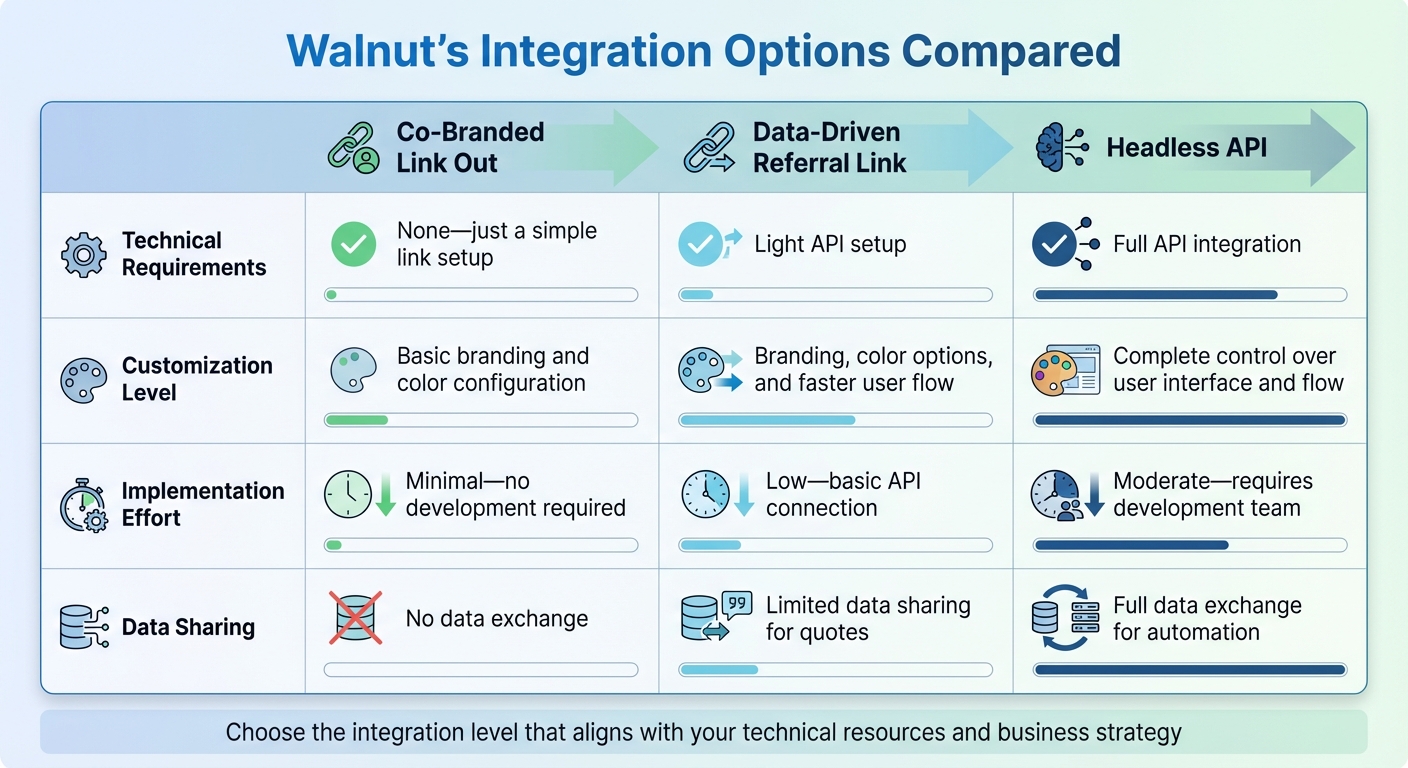
Rental platforms vary widely in their technical capabilities and business goals when it comes to embedding insurance. To meet these diverse needs, Walnut provides three integration options, each with its own balance of simplicity, customization, and effort.
Integration Type
Technical Requirements
Customization Level
Implementation Effort
Data Sharing
None - just a simple link setup
Basic branding and color configuration
Minimal - no development required
No data exchange
Light API setup
Branding, color options, and faster user flow
Low - basic API connection
Limited data sharing for quotes
Full API integration
Complete control over user interface and flow
Moderate - requires development team
Full data exchange for automation
These options allow platforms to choose the level of integration that aligns with their technical resources and business strategies, ensuring flexibility and ease of implementation.
Beyond the technical aspects, embedded insurance adds a powerful economic advantage for rental platforms. Walnut's streamlined approach not only simplifies integration but also transforms insurance into a revenue-generating asset.
By eliminating the need for agents, brokers, and costly advertising, embedded insurance significantly reduces traditional sales costs. Platforms can earn revenue through referral fees or a share of premiums, while automated coverage strengthens customer loyalty by simplifying the leasing process and building trust.
"By allowing insurers to reach their customers, these businesses also create an additional revenue stream for themselves." - TechVision.Global
The embedded insurance market is poised for explosive growth, with projections estimating it will reach $722 billion in gross written premium by 2030 [14].
Walnut's API-driven model also enhances operational efficiency by automating critical processes like underwriting, policy issuance, and claims handling [15][16]. This allows platforms to adjust pricing and risk controls in real time, cutting down on manual oversight and administrative costs [15][16]. In a competitive rental market, these efficiencies can set platforms apart [14].
Airbnb's built-in protections have set a new standard for trust and convenience in the rental market. This model is now being adapted for long-term rentals, where leases span extended periods. By embedding insurance directly into leasing platforms, coverage for both landlords and tenants is automated right from the start. This shift connects the innovative approach of short-term rentals with the practical needs of long-term tenancy.
But it’s not just about simplifying operations - embedded insurance also delivers real financial benefits. Through API-driven integration, tasks like underwriting, policy issuance, and claims handling are streamlined, creating opportunities for new revenue streams. This modern approach is transforming how risks are managed in the rental industry.
Walnut Insurance offers rental platforms the flexibility to embed protection in a way that suits their needs. Whether through a co-branded link, a data-driven referral, or a fully integrated headless API, platforms can choose the level of customization and technical complexity that aligns with their goals. Walnut’s solutions make it easy to integrate insurance coverage from the start of a lease, helping platforms stay competitive as market demands evolve.
The long-term rental market is following in Airbnb’s footsteps, adopting automatic coverage at lease signing. This approach removes obstacles, builds trust, and seamlessly weaves insurance into the rental experience.
Embedded insurance brings clear benefits to landlords and tenants by offering built-in protection and simplifying the rental process. For landlords, it ensures properties are covered automatically, reducing risks and cutting down on time-consuming administrative tasks. Tenants, on the other hand, gain peace of mind knowing their belongings and liabilities are safeguarded from day one.
This integrated solution speeds up lease signings, reduces disputes about insurance coverage, and provides reliable protection across the board. By weaving insurance directly into the rental process, both landlords and tenants avoid the hassle of managing separate policies, making renting smoother and more secure for everyone involved.
Walnut Insurance offers API-driven tools that integrate smoothly with rental platforms. These include real-time quoting, instant policy binding, automated compliance, and policy verification. Together, these features simplify daily operations, build trust, and reduce risks.
Whether through REST APIs or no-code options, Walnut provides rental platforms with the flexibility to optimize workflows and grow with ease. By embedding these solutions, rental businesses can deliver a hassle-free experience for users while opening doors to additional revenue streams.
Embedded insurance offers rental platforms a way to tap into new revenue opportunities. It does this by increasing sales conversions, generating recurring income from add-on packages, and creating fresh distribution channels. At the same time, it simplifies operations, cuts administrative costs, and builds customer loyalty, making it easier for platforms to offer insurance as a valuable service.
By weaving insurance directly into the rental process, platforms can improve the overall user experience while monetizing services that promote trust and reduce risks for both property owners and renters. This strategy not only boosts profitability but also helps nurture stronger, long-term customer relationships.