
January 19, 2026
Ever noticed that travel insurance gets added with a single click when booking a flight or hotel? That’s embedded insurance - coverage built right into the booking process. It’s faster, easier, and growing fast.
Here’s why it matters:
Travel platforms like Airbnb and HK Express already use APIs to integrate insurance directly into their systems, offering personalized protection and instant claims processing. This trend is reshaping how travelers secure peace of mind, making insurance a seamless part of the booking experience.
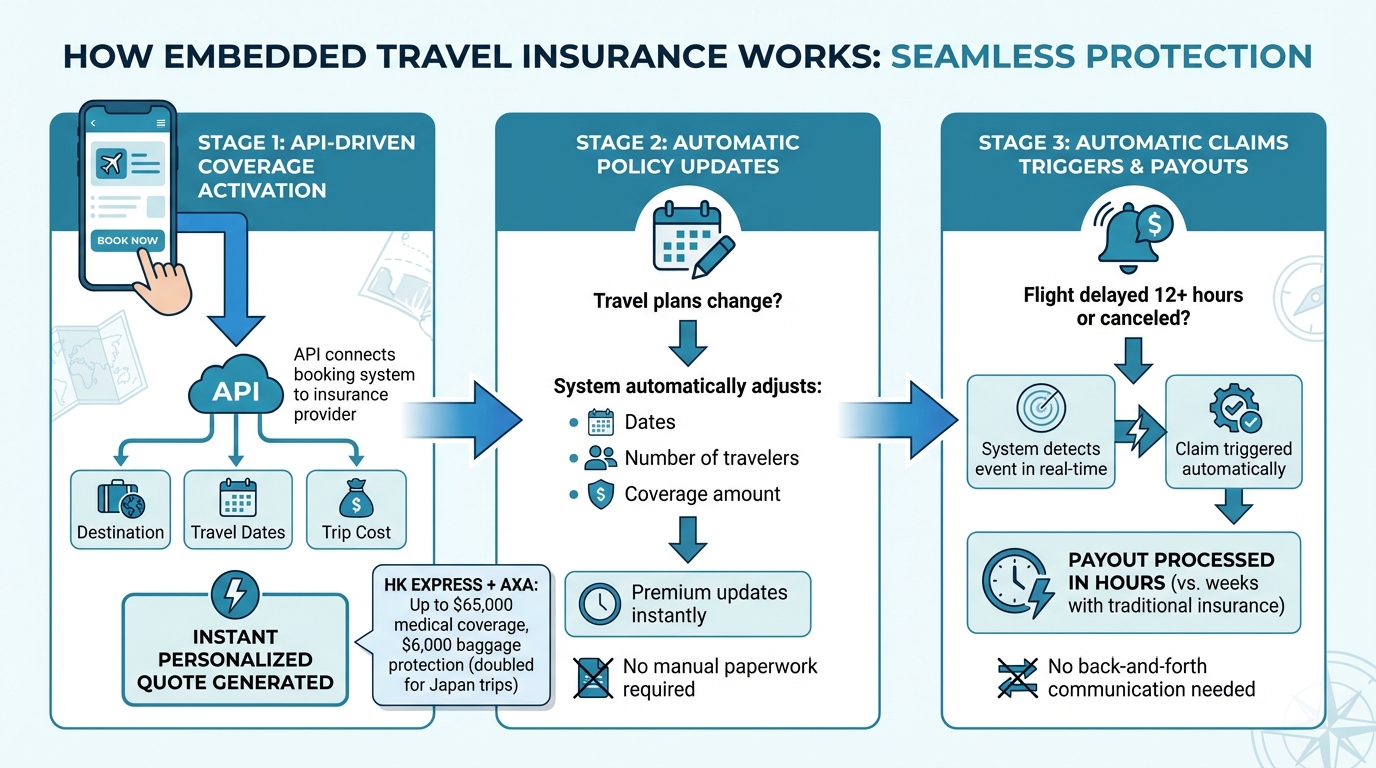
How Embedded Travel Insurance Works: From Booking to Automatic Claims
Booking apps have made it easier than ever to secure travel insurance, integrating protection into the booking process without requiring extra effort from travelers.
When you hit "book now", APIs spring into action, linking the booking system with insurance providers. These APIs pull key trip details - like your destination, travel dates, and total cost - to create a personalized insurance quote instantly.
This API-first approach allows insurers to seamlessly integrate features like quote generation and underwriting across multiple platforms, including mobile apps, websites, and third-party tools. By using API gateways to manage traffic and security, these systems ensure smooth performance even during peak booking times[4].
A great example of this is HK Express, which teamed up with AXA Hong Kong and Macau in June 2024. Travelers booking flights could add insurance with a single click, gaining up to $65,000 in medical coverage and $6,000 for baggage (doubled for trips to Japan)[5]. The API automatically fills in all trip details, eliminating the need for travelers to re-enter information. This integration also paves the way for automated claims processing, making the experience even more seamless.
Embedded insurance doesn’t just simplify buying coverage - it also transforms the claims process. Traditional travel insurance often involves tedious paperwork and long waiting periods. In contrast, embedded insurance uses APIs to monitor real-time data, such as flight delays or cancellations, and triggers claims automatically. For instance, if your flight is delayed by more than 12 hours or canceled due to bad weather, the system detects this and starts the payout process right away[6].
If your travel plans change - like adjusting dates or the number of travelers - the system updates your policy and premium instantly[1]. This AI-driven approach removes the hassle of back-and-forth communication, delivering payouts in hours instead of weeks[3]. These automated processes ensure claims are handled efficiently across various platforms.
Many platforms have successfully integrated embedded insurance into their services. For example, Airbnb offers a separate travel insurance option through Generali US Branch, covering up to 100% of eligible reservation costs[1].
Revolut’s Ultra plan includes "cancel for any reason" insurance, reimbursing users for up to 100% of non-refundable costs in specific cases and 70% for other reasons[3]. Meanwhile, Tesla Insurance uses real-time driving data to adjust premiums dynamically, with written premiums jumping from $12.7 million to $109.9 million in 2023[5]. These examples highlight how embedded insurance adapts across industries, offering protection precisely when and where customers need it.
Bundled insurance simplifies the travel planning process by integrating coverage directly into the booking experience. When reserving a flight or hotel, insurance options are presented right alongside your reservation - no need to fill out separate forms or spend time comparing policies. In fact, 77% of travelers report that having more purchase options, like bundled insurance, influences their choice of travel provider[9].
If your travel plans change, the system automatically adjusts your premium to reflect the updated details[1]. This means your coverage is tailored to your specific trip, whether it includes medical coverage up to $50,000, trip cancellation protection up to 100% of your booking cost, or baggage loss coverage up to $1,000[1].
The process saves time by handling the fine print for you. Instead of digging through coverage options and exclusions on your own, the platform does the heavy lifting, allowing you to focus on your trip.
Bundled insurance isn’t just about convenience - it also fosters trust by leveraging well-known brands and offering seamless support. Travelers tend to feel more comfortable purchasing coverage through their airline or booking app rather than dealing with an unfamiliar insurance company. 60% of consumers are willing to purchase embedded insurance, as it directly addresses their travel concerns at the exact moment they’re making plans[2].
For travel companies, the benefits are clear: 86% of travel executives agree that offering travel insurance improves customer loyalty[9]. By embedding protection into the booking process, it feels like a natural extension of the trip rather than a hard sell. And when unexpected issues arise, the claims process is quicker and more straightforward, leading to higher satisfaction compared to standalone insurance options.
Embedded insurance transforms the booking process into a seamless experience, helping travelers avoid the dreaded decision paralysis. By automatically updating policies when reservation details change, platforms eliminate coverage gaps and keep customers moving forward[1].
Another standout feature is instant parametric claims, which provide immediate payouts for events like flight delays or severe weather disruptions[10]. This rapid response not only reduces stress but also ensures a smoother journey overall. Many embedded insurance plans also include 24/7 assistance services, such as emergency hotlines and concierge support, offering more than just financial reimbursement. These services provide comprehensive trip protection, enhancing peace of mind and creating a more enjoyable travel experience[1][8]. Beyond delighting customers, these features also unlock new ways for platforms to generate revenue.
Travel platforms can tap into direct commission income by acting as licensed insurance providers. Take Airbnb, for instance - through Airbnb Insurance Agency LLC, the company earns compensation for every policy sold on its platform[8]. This creates a consistent revenue stream from a service that travelers already value.
Additionally, platforms can bundle services like 24-hour emergency assistance, concierge support, and roadside help into their protection plans, adding even more value. Automated pricing adjustments make it easy to integrate these extras seamlessly[1][8]. By combining insurance premiums with these additional services, platforms can maximize the transaction value while improving operational efficiency[8]. This approach not only boosts revenue but also strengthens the platform's position in the market.
Embedded insurance doesn't just improve customer experiences and revenue - it also sets travel platforms apart in a crowded market. As BCG notes, "embedded insurance is no longer just an add-on; it is becoming a native function of next-generation insurance technology platforms"[10]. Platforms offering comprehensive protection show they care about the entire travel journey, not just the initial booking.
The growth potential is immense. Embedded insurance is expected to surpass $70 billion in gross written premiums by 2030, a significant leap from its current figure of about $13 billion[10]. As Skift highlights, "travel insurance has become an unexpected linchpin in delivering a fully connected customer experience, helping travel providers offer more personalized purchasing options"[11]. By integrating insurance early, platforms position themselves as full-service travel partners, moving beyond being just booking tools to becoming indispensable parts of the travel experience.
Walnut Insurance simplifies the process of embedding insurance into travel services, offering solutions tailored to different technical capabilities. For businesses with dedicated engineering teams, Walnut’s RESTful APIs enable seamless integration of insurance products directly into booking workflows. This approach allows companies to have complete control over the design and functionality of their user interface, ensuring a cohesive experience for their customers[2].
For those without extensive development resources, Walnut provides no-code, plug-and-play components. These ready-made tools make it easy for travel businesses to offer insurance without needing to build systems from scratch. Options range from simple co-branded link-outs to fully customizable, headless API implementations. Whether it’s a small boutique agency or a large-scale booking platform, Walnut’s flexible integration options make adding insurance an accessible and efficient process.
Walnut Insurance processes quotes and issues policies instantly, automating pricing and activation[2]. With access to over 14 insurance carriers, the platform offers a variety of coverage options, including trip cancellation, medical emergencies, and baggage loss. Customers can activate these protections with a single click during checkout[1].
This range of coverage allows travel businesses to cater to diverse customer needs. For instance, adventure travelers might prioritize medical emergency coverage, while luxury travelers may value trip cancellation protection. Walnut’s instant activation ensures that customers receive confirmation and policy documents immediately, enhancing their overall experience and peace of mind.
Walnut also takes the hassle out of compliance by handling licensing requirements and automatically providing state-specific disclosures[7][8]. This eliminates the regulatory burden for travel businesses, allowing them to focus on delivering exceptional service.
The platform supports multi-channel distribution, offering insurance at various touchpoints - from API-based checkout integrations to follow-up emails[1]. This approach ensures that customers can access insurance options throughout their journey, creating more opportunities for businesses to boost revenue while enhancing customer satisfaction.
Embedded travel insurance is quickly evolving from a simple add-on to an integral part of the booking process. The numbers speak for themselves: projections show the market growing from around $13 billion in 2024-2025 to over $70 billion in gross written premiums by 2030. By 2028, more than 30% of all insurance transactions are expected to take place through embedded channels [10][12].
Industry leaders are recognizing this shift:
"Embedded insurance is no longer just an add-on; it is becoming a native function of next-generation insurance technology platforms." - BCG Article [10]
This transformation is being driven by features like seamless integration and automated claims processing. For example, platforms like Airbnb have already adopted fully embedded insurance systems that automatically update policies when guests adjust their reservation dates or the number of travelers - removing the need for manual updates entirely [1][7].
For travel businesses, this trend opens up exciting opportunities. Walnut Insurance offers tools to make integration simple, whether through RESTful APIs for custom setups or no-code solutions for quick implementation. With instant quote and binding capabilities, access to over 14 carriers, and built-in compliance features, travel platforms can easily incorporate insurance without taking on extra technical challenges. This enables businesses to meet changing customer expectations while adding new revenue streams.
The future belongs to platforms that treat insurance as a seamless, built-in feature. As younger, tech-savvy travelers who prefer digital solutions take center stage, embedded insurance is set to become the new standard.
Embedded travel insurance offers U.S. travelers an easy and efficient way to safeguard their trips. By integrating coverage directly into the booking process for flights or hotels, travelers can secure protection automatically at checkout - no need to hunt for a separate policy. This convenience at checkout saves time, skips unnecessary steps like comparing plans or filling out extra forms, and ensures the coverage matches the specific itinerary, covering issues like flight delays or cancellations.
One standout benefit is quicker claims processing. Many embedded policies include automatic claims triggers, enabling booking platforms to confirm incidents like delayed flights or canceled reservations right away. This means faster reimbursements and less reliance on tedious paperwork. Plus, bundled insurance often comes at competitive prices, making it a cost-effective choice compared to standalone policies.
In short, embedded travel insurance simplifies the process: one quick transaction, immediate activation, and faster, more straightforward claims - all presented clearly in U.S. dollars (e.g., $29.99). It’s a practical and reliable choice for today’s travelers.
APIs serve as the link that integrates travel insurance directly into flight and hotel booking platforms. When you book a trip, the platform taps into an insurance provider’s API to create a tailored policy on the spot, adding the cost - like $29.99 - to your total. This way, your coverage is ready to go as soon as you check out, with no extra steps required.
They also simplify the claims process. By pulling data such as flight numbers, hotel stays, or cancellations, APIs can automatically trigger reimbursements or assistance for covered events, like a delayed flight. This real-time functionality eliminates manual claims, making travel insurance both easier and more attractive for travelers.
Travel platforms are making it easier than ever for U.S. travelers to secure insurance by embedding it directly into flight and hotel bookings. Instead of going through the hassle of purchasing insurance separately, coverage is now automatically added during checkout. This is all thanks to APIs that instantly issue policies tailored to the booking and connect them to real-time claims triggers, like flight cancellations or lost baggage.
By bundling insurance with bookings, the process becomes much simpler for travelers. The cost is presented upfront as a single amount (e.g., $29.99 for a week-long trip), and any claims can be managed through the same app used to book the trip. This seamless approach not only speeds up payouts but also improves customer satisfaction and encourages more people to opt for coverage. For travel platforms, it’s a double benefit - higher revenue and stronger customer loyalty. Embedded insurance is proving to be a smart move for both businesses and travelers alike.